Friday, 21 June 2019

James Frey & Nils Johnson-Shelton: Sky Key (2015)

    Sky Key—wherever it is, whatever it is—is next. And the nine remaining Players will stop at nothing to get it (Goodreads)

    Once again, the immense task that the authors undertake must be acknowledged: Having so many characters, each with their own intricate plot and backstory is not an easy undertaking, but as in the first novel, the duo of writers handles it extremely well, as each character has a unique and well developed story, complete with the signature action scenes where the writing really flourishes. That being said, the whole thing is a bit too similar to the first novel in general, as both share the same story structure and pacing. The only thing that might set this second book apart is the further development of the alien lore, but that is unfortunately not done well and just adds an unnecessary element to an already packed novel. The first novel was good, of course, but this second one feels a bit like a convoluted remix, rather than a sequel. All in all, though, the fast-paced plot and dynamic characters enable readers to stay invested in the trilogy leading up to the final novel. 8.1/10

Monday, 20 May 2019

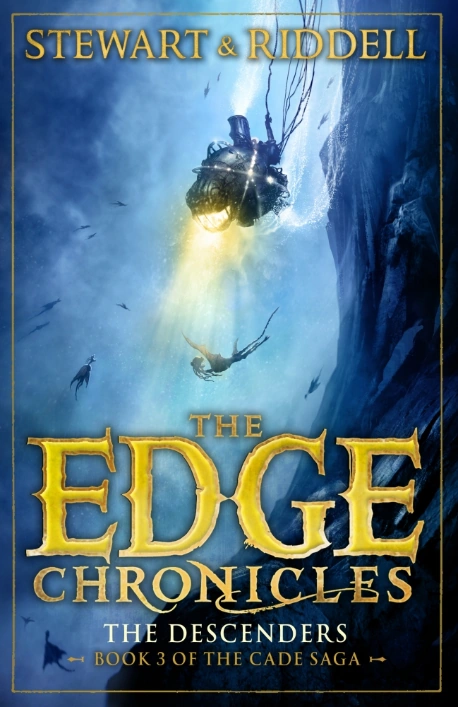
Paul Stewart & Chris Riddell: The Descenders (2019)

    Quove’s deadly agenda has finally caught up with Cade, and now he must leave his home and flee once more, this time to the legendary floating city of New Sanctaphrax (Goodreads).

    A slightly convoluted plot aside, this final installment of Stewart and Riddell's epic series must first and foremost be regarded for what it truly represents: The immense scale and magnitude of how far the co-authors have come in their development of the Edge itself. The scale at which the series comes to be written is admirable, and though the tenth novel gave a small piece of this, it left something to be discovered, and this thirteenth novel fulfills it. Upon first inspection it is easy to see the flaws: the slower pace, the exorbitant amount of characters, and the lack of a strong antagonist, but in taking a step back to examine this conclusion in the overall scope of the series prompts a much greater appreciation. That being said, the flaws still have an impact on the quality, of course, so it is by no means a perfect novel. Overall, though, it is a much more thought-provoking and serene novel than perhaps any of its predecessors, and yet it still manages to unite the tales prior to it, although perhaps with too many endings in all of the loose endings needing to be tied up. Those tallow-hats are also pretty sweet. 8.3/10

Saturday, 18 May 2019

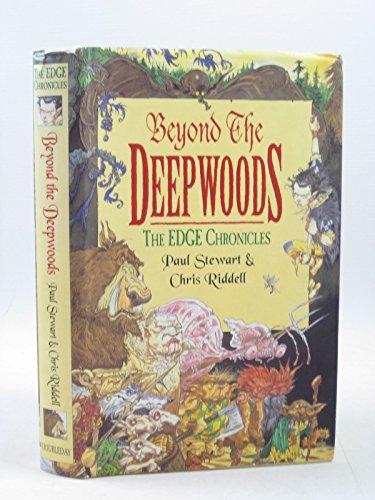
Paul Stewart & Chris Riddell: Beyond the Deepwoods (1998)

    Abandoned at birth in the perilous Deepwoods, Twig Verginix is brought up by a family of woodtrolls. One cold night, Twig does what no woodtroll has ever done before – he strays from the path (Goodreads).

     In terms of world-building and visual accompaniments, Stewart and Riddell's series is perhaps unparalleled. Countless fantastical creatures being unveiled through the eyes of a relatable and likable protagonist in Twig is a foolproof strategy used brilliantly by the authors. The countless adventures he experiences throughout the plot might seem a bit repetitive after a while, but the imagination and variety implemented in each is enough to make them each unique in their own right. The fast paced, high-stakes adventures are balanced out with slower ones which also serve to develop Twig's character, and so pacing is far from an issue, but that being said, there is some room for character development overall. The climax on the Edge itself is executed well, with the final declaration of independence from our protagonist being a solid emotional moment. Although the authors do not gamble on much in terms of development and plot, the imagination showcased in the world they set up make it an excellent novel. 8.6/10

Thursday, 25 April 2019

James Frey & Nils Johnson-Shelton: The Calling (2014)

    When the game starts, the players will have to find three keys. The keys are somewhere on earth. The only rule of their Endgame is that there are no rules (Goodreads).

     Having not read The Hunger Games, I was able to read this novel pretty much unbiased, but from what I know of Collins' series, Frey's story is definitely not the same. With that out of the way, this novel was very enjoyable. Each character is developed well, and the frequent swapping between them leads to near-perfect pacing. Having so many competitors be morally ambiguous is also a plus, as each has near equal rights to the title of protagonist. Obviously some are more villainous than others, but overall, a wide variety of characters, some meeting their end as a subversion of expectations, is utilized extremely well. That being said, there are perhaps too many main characters. Dealing with so many is obviously a daunting task, and the authors dealt with it relatively well, but problems still arise as so many names could possibly become jumbled in the reader's mind. The "normal outsider" character is definitely a good addition, however, and provides a refreshing break in the midst of supernatural circumstances. Overall, the premise is good, the lore is slightly underdeveloped, but character variety and diversity sets the Endgame series apart in its introductory novel. 8.4/10

Thursday, 28 March 2019

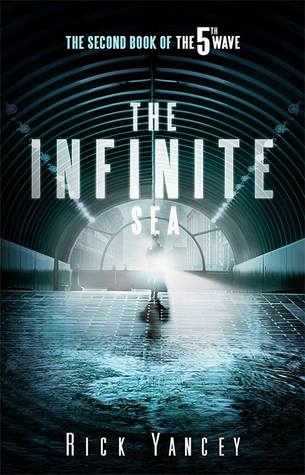
Rick Yancey: The Infinite Sea (2014)

    As the 5th Wave rolls across the landscape, Cassie, Ben, and Ringer are forced to confront the Others’ ultimate goal: the extermination of the human race (Goodreads).

It's not as good as the first one. Not by a long shot. That isn't to say it doesn't have its moments, but for starters, it's just not nearly as long. A sequel should be able to build on its predecessor in more ways than one, but this novel barely expands on the dystopian world set up in the first. For one, it's supposed to have been a worldwide apocalypse, right? Unfortunately, the author only details a select few frustratingly 'special' Americans (not that Americans can't be special). The plan of the antagonists is also overcomplicated, as if the author went a little overboard on the amount of layers and deception he wanted in the novel. And don't get me started on the romances. Luckily, the pacing picks up towards the end and new perspectives make the narration unique and enjoyable. The action is very well dictated, if a little overwhelming, and the symbolism and allegories are well-crafted, if a little obvious. Overall, though, there's not much development as a whole, and the novel might have been better merged into the first or third installments. 7.3/10

Tuesday, 19 March 2019

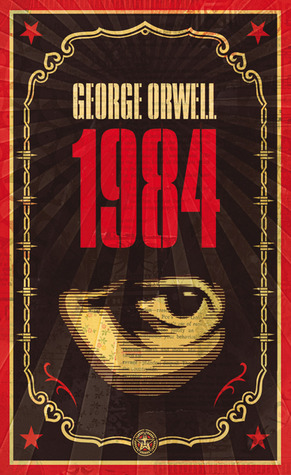
George Orwell: 1984 (1949)

    Winston Smith works for the Ministry of truth in London, chief city of Airstrip One. Big Brother stares out from every poster, the Thought Police uncover every act of betrayal (Goodreads).

    When one ignores the large political treatise slapped in the middle of the novel, 1984 is perhaps unparalleled in terms of its poignancy and overall cultural impact throughout the years. Orwell's vision of a dystopian future puts the modern plethora of young adult apocalypse fiction to shame, mostly because it is just so incredibly hopeless (the actual story, that is). Orwell creates a legendary subversion of expectations with his incredibly grey, monotone story that is somehow able to resonate so wonderfully and colourfully with the real world. The parallels between The Party and various fascist regimes of history are pretty obvious, and Winston, our protagonist is, at times, frustratingly dry, but Orwell is still able to craft a novel that seems devoid of all majesty, which in turn, makes it all the more horrifyingly majestic. 8.6/10

Monday, 18 March 2019

Scott Westerfield: Leviathan (2009)

    Aleksandar Ferdinand, a Clanker, and Deryn Sharp, a Darwinist, are on opposite sides of the war. But their paths cross in the most unexpected way, taking them both aboard the Leviathan on a fantastical, around-the-world adventure (Goodreads).

    Although the two separate plotlines are not entirely original, Westerfield showcases his creativity in what the main focus of the novel seems to be: world building. Combined with splendid illustrations, Westerfield crafts a uniquely intriguing alternate history, and is able to merge historical fact with well integrated creative liberties with regard to actual world events. As for the steampunk aspect of it, well, he crafts that equally as well, with descriptions of technology that enriches the story while not being overly wordy (some of the made-up slang could use a little work, though). Both main characters carry their respective stories well, although they are not really balanced by a compelling antagonist, and perhaps not an uncompelling one either. The ending seems slightly abrupt, and it sets up a clear expansion, but may have possibly benefited from a bit more resolution. All this being said, the writing in and of itself really just reaches the satisfactory level, with instances of both great and weaker descriptions littered here and there. 8.3/10