Thursday, 7 February 2019

Ben Tripp: The Accidental Highwayman (2014)

    Mistaken for Whistling Jack and on the run from redcoats, Kit is catapulted into a world of magic and wonders he thought the stuff of fairy tales (Goodreads).

     Unlike real life, in the world of Kit Bristol, not everything is better with magic. Tripp's novel starts out reasonably well, with a fun, swashbuckling tale of highway robbery and a cool horse, but as soon as magic begins to develop, it loses a lot of its charm. The magical universe Tripp proposes is not well integrated, and the actual concept of it isn't really all that original. It appears that the author felt like adding a 'G' at the end of 'goblin' is what passes for originality. All that being said, the story becomes fairly engaging as it goers along, and once one gets past the cliche magical exploration. There isn't a whole lot of dynamic character development that isn't presented in an obvious manner, but the characters do begin to endear themselves to readers (barring any mention of a pointless love triangle). An unnecessary amount of main antagonists are added, and the dull politics that they accompany are no more intriguing. Without the magic (which sounds like a terrible thing to say) and with at least one less antagonist, Kit Bristol's tale might have been made a bit more compelling. As it is, though, it might be the very definition of enjoyably average. 6.8/10

Tuesday, 29 January 2019

S. Andrew Swann: Dragon Thief (2015)

    In a fit of drunken self-pity, Frank turns to using a cursed artifact, hoping to become a man again, if only temporarily (Goodreads).

     The sequel to Dragon Princess seems to disregard what character development previously took place, but it does make up for that in terms of character development in its own right, as all of the main protagonists go through at least some well developed changes. The humour of this second installment isn't executed quite as well as that of its predecessor, but in terms of plot complexity and the evoking of emotion, it far surpasses it. The politics of Swann's world, along with the body-switching concept that he manages to keep fresh, makes the plot much more intriguing, although not without its faults. The plot increasingly gets more convoluted as more and more characters reveal ulterior motives, and while this does increase the sophistication, to a point, it also makes the novel slightly harder to stay with. That being said, it is still engaging, as new character introductions increase the emotion of the piece and add a whole lot more depth. Swann executes this depth with a fair amount of ability, but he almost adds too many layers to the whole story, each of them probably good and sensible in their own right, but mashed together in a rather fast-paced adventure is likely not the best application. 7.9/10

Thursday, 24 January 2019

John Bellairs: The House with a Clock in Its Walls (1973)

    Lewis Barnavelt comes to live with his Uncle Jonathan and quickly learns that both his uncle and his next-door neighbor are witches on a quest to discover the terrifying clock ticking within the walls of Jonathan's house (Goodreads).

    Although at first glance, the novel is a short and sweet tale of magic and friendship, Bellairs' book is much more when examined further. He creates an extremely endearing protagonist in Lewis, with far more complex story elements than one might first expect from a children's novel of this length. That being said, the plot isn't quite as interesting as it could have been, but thanks to the lead of Lewis and Bellairs' jaunty writing style, it is an intriguing read nonetheless. The rules of the magic in this universe are not really explained well enough, but that's a trivial manner when it comes to children's fantasy. What really sets this book apart is the slight elements of, not necessarily horror, but unease. The kind that makes the reader slightly unsettled, a sort of nonchalant gruesomeness. The antagonists and their backgrounds are also not fleshed out quite as much as they should be, but tidbits of humour and a charming lead character do detract from the negatives. 8.0/10

Monday, 21 January 2019

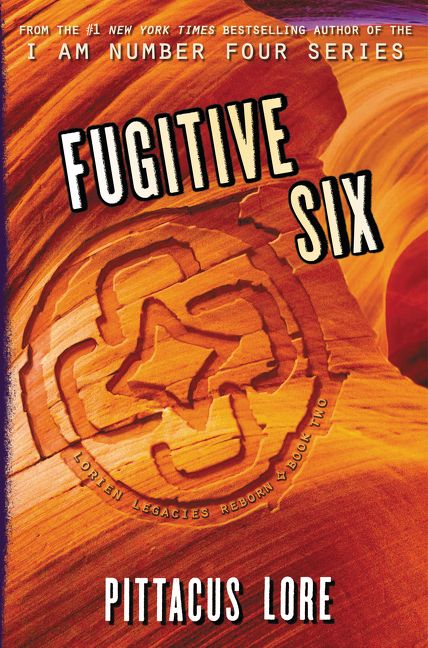
Pittacus Lore: Fugitive Six (2018)

    Escape into a world where humans possess astonishing powers and Taylor's adventure continues into even more dangerous grounds (Goodreads).

     Although it retains some of the problems from the first book, those being too many main characters and plotlines to keep track of, this second installment executes the rest of the novel with much more precision and charm. Each of the characters is developed well, although all of the different plots start to bleed into one another and almost seem too similar. That being said, this sequel is much more fast-paced and overall more interesting than its predecessor. Each of the groups vying for power are, in their own unique ways, intriguingly imperfect, and the main characters' separation early on leads to a climactic confrontation in a very Monsters Of Men-esque fashion. The climax in question, while undoubtedly exciting, is a tad convoluted and messy, but the fashion in which it resolves leads to a suspenseful cliffhanger that will surely leave readers begging for more. The characters integrated from the previous series are showcased decently, some more than others, but the new additions fall a little flat. With unique character dynamics and a riveting plot, the new Generation of Lorien seems to be taking off. 8.4/10

Friday, 18 January 2019

Stephen King: The Gunslinger (1982)

    Pursuing the man in black, an evil being who can bring the dead back to life, Roland is a good man who seems to leave nothing but death in his wake (Goodreads).

     I did literally fall asleep while reading this, but that may have been merely due to my overtired nature at the time. That being said, a lot of this first installment of the Dark Tower series was extremely dull. Luckily, it picks up the pace through the last third of the novel, and the climax, a bit underwhelming in itself, is, at the very least, quite thought-provoking. Unfortunately, the main character is rarely redeeming enough for readers to be invested in his journey, and there are perhaps a few too many flashbacks into a world that is not well established in the slightest. Several interesting concepts are implemented, and King writes with an intriguing tone of articulate vulgarity, which does provide some unique moments. There are some scenes which are well described and quite riveting, while others are downplayed to an extent which seems very unnecessary. Overall, a lackluster foray into a new world, but with the popular consensus of the following novels in the series being much better, I may find myself returning to the world of the Dark Tower. 6.7/10

Tuesday, 20 November 2018

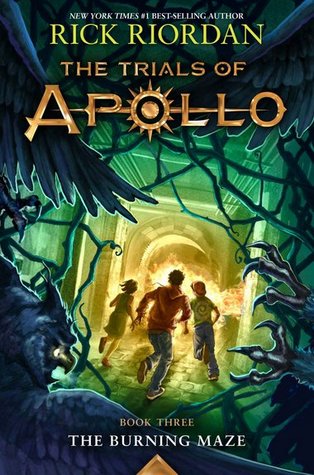
Rick Riordan: The Burning Maze (2018)


    While Leo flies ahead on Festus to warn the Roman camp, Lester and Meg must go through the Labyrinth to find the third emperor—and an Oracle who speaks in word puzzles—somewhere in the American Southwest (Goodreads).

     "Why do I keep reading Rick Riordan's novels?" you might ask. The last two I reviewed were entirely underwhelming, and the franchise seemed to be going nowhere fast. Well, I keep reading them because sometimes Riordan puts out gems such as this. This third installment in Riordan's newest saga is excellently crafted. Solid character development that was extremely lacking in the previous novel turns up in spades in this one. An entertaining plot, well paced, with the addition of new characters and the revival of old favourites is done splendidly. Many elements are included, many of them layered and nuanced, even though the new villain introduced is slightly less developed than might be satisfactory, but this may yet change with following novels. Arguably the darkest novel in Riordan's Half-Blood canon, the novel features some of the most emotional and raw scenes in the entire saga, although at times, the narrator doesn't really know the spot for his humour. Add to this some jokes that fall somewhat flat, while some provoke a chuckle, the comedy portion of the novel is a mixed bag. In the end, though, Riordan redeems himself from some past projects with this excellent novel. 8.1/10

Friday, 5 October 2018

Khaled Hosseini: The Kite Runner (2003)

    The unforgettable, heartbreaking story of the unlikely friendship between a wealthy boy and the son of his father’s servant (Goodreads).

     There are so many conflicting feelings that go along with this novel. On the one hand, Hosseini writes with a brilliant voice, as he dictates a wonderful story with dynamic characters and showcases his mastery over emotion. Literary devices are used excellently, and the heart-wrenching moments truly set the novel into a league of its own. That is, until you consider the other hand. Our protagonist is so awfully frustrating, and that makes him a hard guy to root for. His self-pity and the painful way he interacts with others makes him hard to sympathize with. Or maybe we see ourselves in Amir more than we would like... Hmm... Anyway, although the author writes with brilliant stunning tenacity, he seems to point out his own hidden meanings. Which sort of defeats the purpose of hidden meanings. Pacing is also an issue, as the middle section is really boring, and an unnecessary bit of suspense is thrown in at the very end, when Amir is so close to completing an absolutely fantastically developed redemption arc. The novel is incredible in parts, and that just makes the frustrating bits all the more frustrating. Brilliant parallels between characters and a story rife with symbolism battle against several glaring negatives to produce a tale that, perhaps, is all the more compelling because of its flaws. 8.2/10