Wednesday, 12 September 2018

Mal Peet: The Penalty (2006)

    As the city of San Juan pulses to summer's sluggish beat, its teenage football prodigy, El Brujito, vanishes without trace. Paul Faustino, South America's top sports journalist, is reluctantly drawn into the mystery (Goodreads).

     Peet writes relatively well; the setting and characters are all described thoroughly, and the overall plot is pretty compelling in and of itself. However, to put it frankly, the book is dull. Not to a huge extent, but the writing is presented in a very bland way, and it's hard to be invested in the positives mentioned earlier when the plot moves slowly. Both plot lines have their moments, but the novel goes back and forth between them so much so that, as soon as one is invested, it switches back, and the reader is forced to start over. Those looking for a book about the sport of soccer (or football for the rest of the world) should look elsewhere, as the sport is not really a factor. Not necessarily a negative, just something of note. Faustino is a likeable enough character, but the rest of the cast echoes just about everything else about the novel: mediocrity. 6.6/10

Tuesday, 4 September 2018

Patrick Ness: The Ask and the Answer (2009)

    Immediately separated from Viola and imprisoned, Todd is forced to learn the ways of the Mayor's new order. But what secrets are hiding just outside of town (Goodreads)?

     A brilliant foray into some of the most difficult themes in literature, this second book in the Chaos Walking trilogy delivers on all levels. It starts right where the first book left off, although from there it actually goes fairly slow. A new narrator adds some variety to the novel's voice, and again Ness writes with simple diction that seems to strike a chord. The concept of the Noise wears a bit thin this time around, though, and as we learn more about it, the rules surrounding its use is somewhat vague. The pace picks up as the plot develops, and the latter half of the book is rife with emotional, heart-wrenching scenes, as we see our protagonists struggle with difficult issues, and readers, too, are forced to pick sides as Ness unveils the true brutality of civil war. As far as complexity goes, this sequel outweighs its predecessor by far, and although some character development is slightly unrealistic, it delivers on that front as well. The antagonist(s) are given a lot more substance this time around, and Ness is able to narrate with such urgency that keeps readers on their toes for the majority of the novel, except for the slightly slower beginning. 8.7/10

Friday, 31 August 2018

Kate DiCamillo: The Tale of Despereaux (2004)

    Welcome to the story of Despereaux Tilling, a mouse who is in love with music, stories, and a princess named Pea (Goodreads).

     It might be charming, but beyond that, The Tale of Despereaux is extremely underwhelming. It's hard to root for the protagonists, not because one of them is named after a vegetable, though that doesn't help, but, to be honest, they don't really do much. Light is good and dark is bad, and sometimes, the imagery going along with that in the book is pretty well-executed, but the entire plot is mostly forgettable. It's also kind of annoying being constantly reminded of what just happened a few seconds ago by random interjections from the author. Luckily, the author writes well enough, with a calm, clear diction, that these interruptions are bearable. Imagery is done well, and the author describes things with an endearing, intelligent voice, and the vocabulary is pretty well done, but a bland plot, characters, and dialogue make for a fairly 'meh' read. 6.5/10

Sunday, 26 August 2018

J.R.R. Tolkien: The Return of the King (1955)

    The armies of the Dark Lord are massing as his evil shadow spreads even wider. Men, Dwarves, Elves and Ents unite forces to do battle against the Dark. Meanwhile, Frodo and Sam struggle further into Mordor in their heroic quest to destroy the One Ring (Goodreads).

    Although it is the third installment in his fantasy epic, Tolkien's world building expertise shines again as he introduces new places, people, and history that makes one feel as if they have been immersed for much longer than they actually have. As the suspense builds towards the climax, readers are torn between wanting to stay surrounded by Tolkien's beautiful, borderline verbose, diction and discovering the penultimate ending. The author switches between different points of view seamlessly, and the many layers of plots and subplots add to an incredible experience. Having Frodo and Sam's journey as a completely separate section of the book has its pros and cons, a pro being able to stay involved with each character more thoroughly, a con being repeated reminders of what is taking place at which time. Nevertheless, Tolkien's fantastic, and by now legendary storytelling abilities more than make up for it, stupendously finishing the saga. 8.8/10

Saturday, 25 August 2018

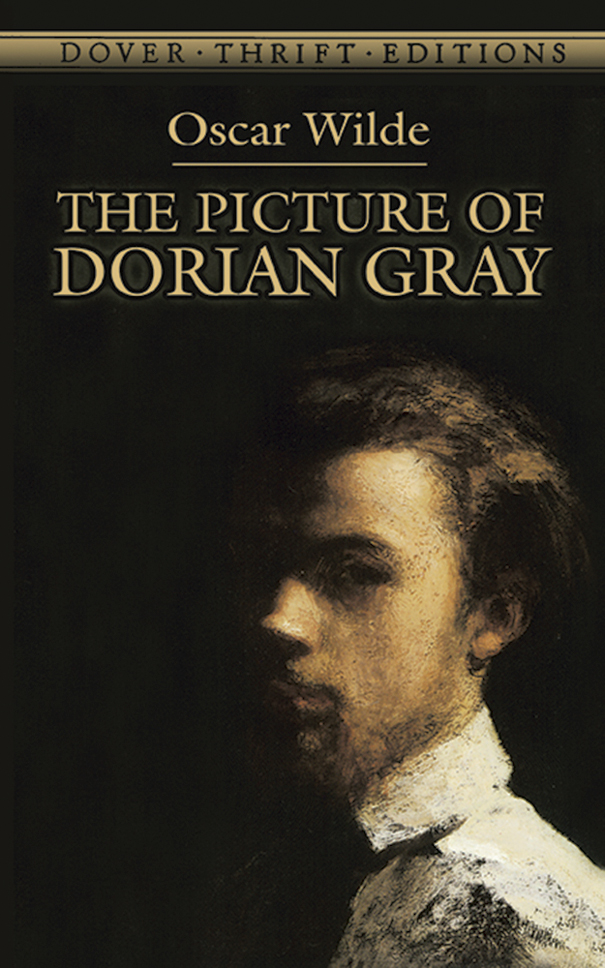
Oscar Wilde: The Picture of Dorian Gray (1890)

    Enthralled by his own exquisite portrait, Dorian Gray exchanges his soul for eternal youth and beauty. Influenced by his friend Lord Henry Wotton, he is drawn into a corrupt double life, indulging his desires in secret while remaining a gentleman in the eyes of polite society (Goodreads).

    A brilliant portrayal of humanity at its most raw, Oscar Wilde uses his trademark wit and thought-provoking philosophy to weave a grand tale that begins as a bold venture into human morality and sin, and finishes as a chilling yarn of horrific proportions. Countless quotable lines are peppered throughout, as Wilde showcases his talent at both dialogue and overall narration. Characterization is also done splendidly, as Basil, Lord Henry, and Dorian Gray himself all shine in their own specific way. The title character in particular stands out, as his transformation from innocent young man into cold-blooded killer paints (heh) an eerie picture of humanity at its worst. Wilde wraps it up with a grim (although, to be fair, somewhat predictable) ending, yet the novel itself leaves readers thinking about its contents for a long time afterwards. 8.7/10

Thursday, 17 May 2018

Patrick Ness: The Knife of Never Letting Go (2008)

    Imagine you can hear everything the town of men say about you. And they can hear everything you think. Imagine you don't fit into their plans. Todd Hewitt is just one month away from the birthday that will make him a man. But his town has been keeping secrets from him. Secrets that are going to force him to run (Goodreads).

    Yeah, it's a little hard to get into, a little difficult to adjust to the narrating voice, but at the same time, the simplistic diction strikes hard into the heart of the reader, and the repetitive way that Ness writes is only repetitive in the sense that his writing strikes an emotional blow every time. This repetition seems to bleed into the story structure, however, and some scenes feel a bit too much like earlier ones. In addition to the writing, Ness also develops wonderful characters, with the conflicted Todd and the intelligent Viola. His world building is also executed decently, although the setting itself isn't incredibly unique. The history and lore of the world, however, is perfectly written, complete with a sadistic cast of villains that relentlessly pursue our heroes, leading to a seemingly hopeless main story, which, with Ness' short, poignant style, leads readers to also long for relief with the protagonists. The main intense scenes are written with such an enthralling simplicity that readers are left with an unfamiliar sense of "hold up, did that just happen?" that they wouldn't have gotten with a scene that is extremely detailed. It's a bold approach, but Ness pulls it off. And that's without mentioning the cool, overwhelming font changes with the Noise. Some heartbreaking... erm... departures add to the overpowering sense of hopelessness woven throughout the tale, and the recurring themes of truth and coming-of-age are also developed well. Wrap it up with one heck of a cliffhanger, and we're left with an incredible series opener. 8.6/10

Sunday, 1 April 2018

Ransom Riggs: Miss Peregrine's Home for Peculiar Children (2011)

    As our story opens, a horrific family tragedy sets sixteen-year-old Jacob journeying to a remote island off the coast of Wales, where he discovers the crumbling ruins of Miss Peregrine's Home for Peculiar Children (Goodreads).

    A very unique concept with found photography is fleshed out beautifully in this introductory novel to Riggs' trilogy. The first half of the novel is particularly excellent in establishing characters and conflict, and although the protagonist is a bit of a brat at times, his multidimensional character gives wonderful substance to the plot around him. The supporting cast has its moments, but are slightly flat at times (other than the protagonist's father, who has great depth, and almost needed more plot dedicated to his internal conflict). After the first half, the book slips slightly into the YA novel trap of typical good versus evil tropes and a weak romance. The main villains aren't too interesting, but Riggs' use of descriptive language and red herrings overwhelms the novel's few shortcomings, most of which are hopefully redeemed in the last two parts of the trilogy. All in all, a great world-building novel that combines intriguing images with an equally compelling story. 8.0/10