Tuesday, 6 February 2018

Stephen R. Lawhead: The Warlords of Nin (1983)

    An urgent message summons Quentin to Castle Askelon. The king, who is dying, wishes to name the brave young man his successor. But first, he sends him on an unfathomable mission (Goodreads).

As verbose and dense as it is, Lawhead's second advancement into universe-building is, well, alright. The dialogue is dry and stretched out, but what action there is is well described and somewhat entertaining. A select few scenes are particularly well done, but the rest of the novel is so extremely over-described that these scenes are almost not worth it. Similar to the first installment, the character development is unrealistic and the entire plot, almost every aspect, is highly anticipated and, yes, cliche. Lawhead obviously tries to keep pace with other, more renowned world-builders such as Tolkien and Lewis, but his attempts fall rather flat in nearly every area. The main antagonist is once again extinguished extremely weakly, after having no interactions with the protagonists. The one main addition to the protagonist's side completely vanishes after only a short time in the plot, while the climax is one of least suspense, as the very element of salvation for the seemingly doomed heroes is introduced before they are even at their most underdog-like status, therefore rendering the hopelessness that is woven throughout the novel (which might have been a good element otherwise) completely useless. Lawhead switches between points of view rather smoothly, but scenes that don't really lead to anything and almost no plot twists make the novel similar to a flat soda. 6.6/10

Friday, 1 December 2017

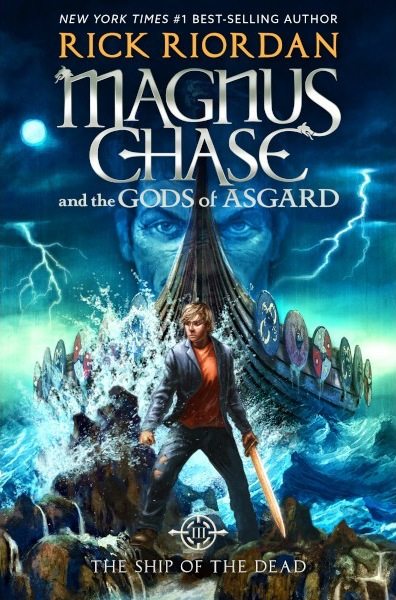
Rick Riordan: The Ship of the Dead (2017)

    Magnus and his crew must sail to the farthest borders of Jotunheim and Niflheim in pursuit of Asgard's greatest threat. Will they succeed in their perilous journey, or is Ragnarok lurking on the horizon? (Goodreads).

    Look, Riordan writes an entertaining novel. I won't deny that. If he wrote entertaining novels with some variety, I would be really on board. YET AGAIN, we are given a predictable and overused plot, this time Riordan using his 'motley crew on board a magic ship' card that he has used before. To round it all off, the Argo III-I mean, the Big Banana-has a shapeshifter, a blonde guy, and someone who doesn't understand modern cultures. All of whom, I might add, are far more interesting than Magnus himself, making me wish that it was written from their perspective instead. There is an absolutely fantastic scene in Hearthstone's story that almost redeemed the book, but unfortunately is a small part in building up to a, frankly, cheesy climax. Maybe Percy could have redeemed it, I don't know. But whatever the case, his involvement in the plot was pointless, to say the least. To top off this cake of cliches and dull narration, there is the LITERAL CHOCOLATE SYRUP of a stupid romance subplot. Not because one character is gender-fluid, mind, but because it is stupid. 5.7/10

Tuesday, 26 September 2017

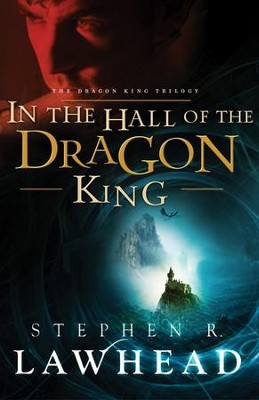
Stephen R. Lawhead: In the Hall of the Dragon King (1982)

    Carrying a sealed message from the war-hero Dragon King to the queen, Quentin and his outlaw companion, Theido, plunge headlong into a fantastic odyssey and mystic quest (Goodreads).

    What starts out as a cliché, slightly dull fantasy actually evolves into an entertaining and well-written novel (although still fairly cliché). The plot jumps right into the action, and although this may be a positive, it gives no background for our protagonist, and we are not able to connect with him as much as we would like. Boring exposition in the first half gives way to much more exciting and intriguing details, although the main character disappears slightly during the climax. His character development, while interesting, is slightly unrealistic and dull, although the rest of the characters are interesting enough. A well-executed and exciting climax (still cliché) is, unfortunately, followed up by a somewhat lame resolution, where the villain, living up to his unexciting and lethargic character, is put down almost as weak as movie-version Voldemort. 6.7/10

Monday, 25 September 2017

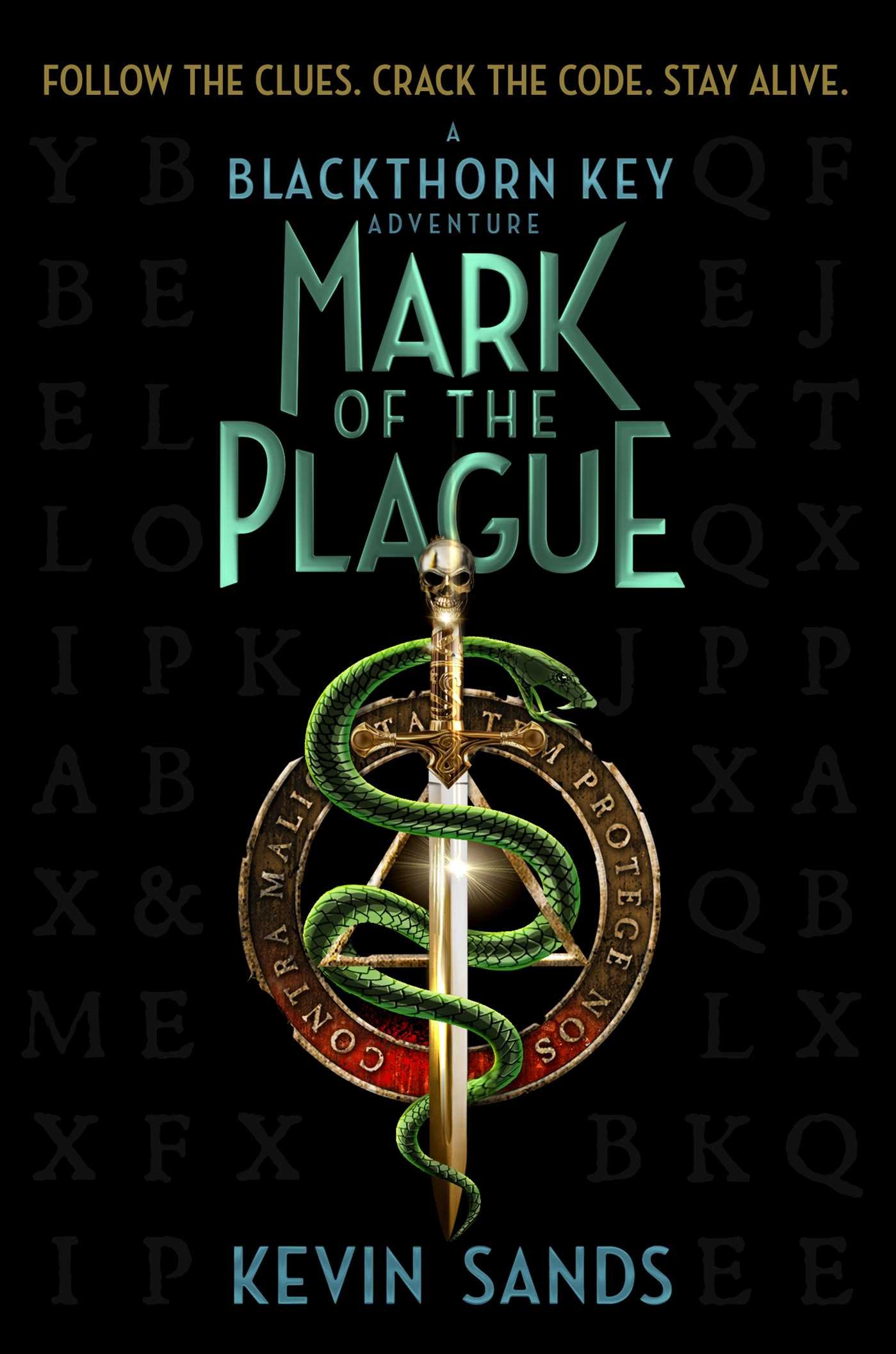
Kevin Sands: Mark of the Plague (2016)

    The Black Death has returned to London, spreading disease and fear through town. A mysterious prophet predicts the city’s ultimate doom—until an unknown apothecary arrives with a cure that actually works. Christopher’s Blackthorn shop is chosen to prepare the remedy. But when an assassin threatens the apothecary’s life, Christopher and his faithful friend Tom are back to hunting down the truth, risking their lives to untangle the heart of a dark conspiracy (Goodreads).

    Rarely is the sequel superior to the original, but the second installment of the Blackthorn Key series is just that. Instead of a simple, mildly engaging plot, readers are given a mystery that finds our protagonist (retaining his compelling and entertaining traits of the previous novel) working through a horrifyingly brilliant setting. Having two possible candidates for an antagonist throughout the story is a wonderful strategy to keep readers on their toes, and Sands is still able to shock readers with a surprising plot twist amidst an exciting and emotional climax. The characters, both good and evil alike, are interesting (although one addition to the protagonist's side falls a bit flat) and the plot is extremely entertaining, while still retaining humorous and dark aspects alike. 8.4/10

Tuesday, 5 September 2017

Jacqueline Rayner: Doctor Who: The Stone Rose (2006)

    A 2,000 year old statue of Rose Tyler is a mystery that the Doctor and Rose can only solve by travelling back to the time when it was made. But when they do, they find the mystery is deeper and more complicated than they ever imagined (Goodreads).

    With excellent portrayals of the beloved TV characters, both fans of the show and casual readers can enjoy this Doctor Who story. An entertaining plot is somewhat predictable, but amusing dialogue and characters make up for it. The time travel becomes a bit confusing, as are several different scenes, but the story remains entertaining, especially with the mysterious premise given at the beginning. The villain is somewhat underwhelming and basic, but a solid ending ties everything together. 6.8/10

Monday, 4 September 2017

Pittacus Lore: Generation One (2017)

    It has been over a year since the invasion of Earth was thwarted in Pittacus Lore's United as One. But in order to win, our alien allies known as the Garde unleashed their Loric energy that spread throughout the globe. Now human teenagers have begun to develop incredible powers of their own, known as Legacies (Goodreads).

    Although it has wonderful character development and an exciting plot; amusing dialogue and a diverse cast; this first installment in the Lorien Legacies sequel series is somewhat underwhelming. While all main characters are greatly developed, the issue arises of having a few too many main characters. One of the great things about the original series is that the few perspectives changed every book., but in this spinoff, readers are overwhelmed by the six backstories and six somewhat separate plotlines (although they are six good ones). The antagonists are brilliantly horrifying, however the main antagonist given to us has no real substance. The secondary group of villains is also well integrated, but overall unoriginal characters and plot get the new series off to a less-than perfect start. 7.1/10

Friday, 1 September 2017

Homer: The Odyssey (-720) - Translated by Martin Hammond (1999)

    If the Iliad is the world's greatest war epic, then the Odyssey is literature's grandest evocation of every man's journey though life. Odysseus' reliance on his wit and wiliness for survival in his encounters with divine and natural forces (Goodreads).

    While extremely descriptive and compelling, Homer's Odyssey is extremely repetitive. Once one gets over hearing 'rosy-fingered dawn' and 'princely Telemachus' and 'god-like Odysseus' repeated over and over again, the story is actually quite interesting. The tale of Odysseus is adventurous and exciting, and the development of Telemachus is brilliantly done as well. A solid cast of secondary characters follow up, while Odysseus internal struggles feature almost as bright as his obvious external ones. While extremely descriptive and compelling, Homer's Odyssey is extremely repetitive. 6.6/10