Saturday, 3 September 2016

S. Andrew Swann: Dragon Princess (2014)

    Frank is left stranded in the Princess Lucille’s body, halfway across the kingdom. The understandably angry Princess Lucille finds herself inhabiting the body of the dragon. In order to set things right, they will have to team up and face down thugs, slavers, elvish bookies, knights in shining armor, an evil Queen, and the hordes of the Dark Lord Nâtalc (Goodreads).

    From the first page, Dragon Princess regales readers with hilarious commentary from the anti-hero of Frank Blackthorne, and contrary to many other dragon-related books, confrontation with the dragon in question is not merely limited to the climax. In fact, it makes up most of the novel. An interesting, albeit not an entirely original, concept forces many humorous moments throughout, however subtle moments of darker humor is also evident. One con of this novel is the fact that there are not many moments in between action, and with every victory, there is another obstacle to take its place. So much does this happen that it almost seems like a collection of short stories. However, with an excellent supporting cast, Dragon Princess is a book that I would read again. 7.8/10

Friday, 2 September 2016

D.J. MacHale: The Merchant of Death (2002)

    Bobby is slowly starting to realize that life in the cosmos isn't quite what he thought it was. And before he can object, he is swept off to an alternate dimension known as Denduron, a territory inhabited by strange beings, ruled by a magical tyrant, and plagued by dangerous revolution (Goodreads).

    Although the final climax was actually fairly interesting, that's about the only positive note I can give this book. The cliche 'young teen finds new world he is destined to save while old man gives him really pointless information' storyline here is in no way made original. Bobby's narration is quite uninteresting and unrealistic, considering it is supposed to be a journal. Bobby's character itself is so brutally flawless (meaning he uninterestingly has no faults), however he puts himself down with such regularity to combat this. After a pointless first chapter, which I believe is supposed to make readers engaged with the characters (it does not), we find out the main antagonist almost right away, and yet we don't see much actual conflict from then on. One character who may actually have made this book the slightest bit better would have been Mark, however his parts in the book were also literally pointless, I mean, the only useful thing he did was give a backpack full of banned objects to Bobby, and Bobby, being who he is, doesn't bother letting Mark or his (also spoiled) love interest help him out at all. In the end, The Merchant of Death could have been a satisfying read, but lack of originality and dynamics spoiled it. 4.2/10

Thursday, 1 September 2016

J.R.R. Tolkien: The Two Towers (1954)

    The Fellowship was scattered. Some were bracing hopelessly for war against the ancient evil of Sauron. Some were contending with the treachery of the wizard Saruman. Only Frodo and Sam were left to take the accursed Ring of Power to be destroyed in Mordor–the dark Kingdom where Sauron was supreme (Goodreads).

    Once again Tolkien brings in descriptive language and ever interesting characters to the world of Middle Earth. Much more fast paced than The Fellowship of the Ring (even with the ents), The Two Towers starts off by pulling at the heartstrings of readers and eventually shows wonderful character development, with all four of the Hobbits clearly growing in courage and in Merry and Pippin's case, stature. Aragorn as well is filling out to be the King he is destined to be, and in Gandalf's situation, his character even changes colour, along with gaining authority. Surprisingly, this novel is also filled with several laugh-out loud moments to go along with the excellent dialogue (see Legolas and Gimli's banter), including one line that would likely maker most junior high students chuckle: "Where did you get the weed you villains?" Another very satisfying addition to the trilogy is the Gollum/Smeagol internal conflict, which adds a whole new dynamic to the overall plot. 8.9/10

Saturday, 6 August 2016

Paul Stewart & Chris Riddell: Doombringer (2015)

    Cade Quarter is building a new life for himself in the wild Farrow Ridges, miles away from civilization – and from the enemies who are seeking him. But when his new home is threatened by villainous mire-pearlers, Cade and his friends must find a way to defend the land they love, and the wise and beautiful secrets it holds (Goodreads).

     Once again an excellent book from the bestselling tandem of Paul Stewart and Chris Riddell. Great writing combined with great illustrations make this a nice 12th book. This one was much better than the 11th, as I thought it had much more of an overall plotline and more action, however, the story arc is still somewhat disconnected between books. After promising an end to the Edge Chronicles after book 10, Stewart and Riddell satisfy their readers still. 7.7/10

Tuesday, 24 May 2016

Paul Stewart & Chris Riddell: The Curse of the Gloamglozer (2005)

    Quint, son of a sky pirate captain, and new apprentice to Linius Pallitax, the Most High Academe, has been set some highly important tasks. Just how important, Quint is about to find out as he and Linius’s only daughter, Maris, are plunged into a terrifying adventure that takes them deep within the rock upon which Sanctaphrax is built (Goodreads).

    Although not suitable to be read first in chronological order, this prequel is an imaginative tale that Stewart & Riddell are able to make seem brand new, even though the Edge was traveled thoroughly in the first three books. Colourful characters such as Maris give wonderful depth to the story, and surprising bits of humor are sprinkled around, although the book can get quite dark and serious. The busyness of the floating city is portrayed wonderfully (the Viaduct Steps chapter is particularly brilliant) which leads to an eerie contrast under the city. An interesting plotline, with Linius' experimenting leading to the creation of the actual villain. One thing that really lacked in the book was character development, as Quint, the main character, is fairly static throughout. All in all, the setting really shines in this book, and the excellent illustrations definitely add to that. 8.5/10

Friday, 20 May 2016

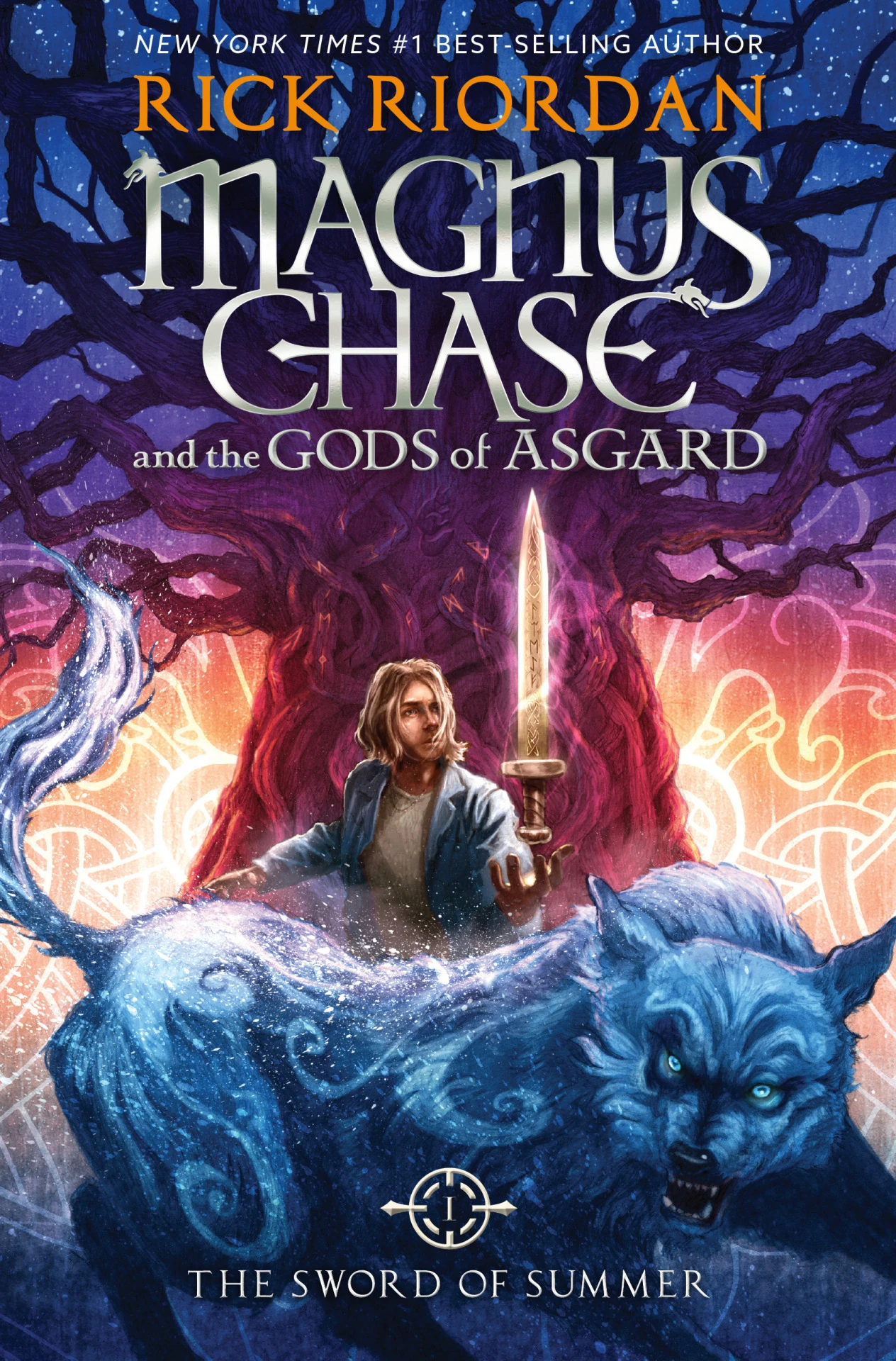
Rick Riordan: The Sword of Summer (2015)

    Magnus Chase has always been a troubled kid. Since his mother’s mysterious death, he’s lived alone on the streets of Boston, surviving by his wits, keeping one step ahead of the police and the truant officers. One day, he’s tracked down by a man he’s never met—a man his mother claimed was dangerous. The man tells him an impossible secret: Magnus is the son of a Norse god. (Goodreads)

    An interesting concept, what with the "starting a new life after death" theme throughout, this novel felt like a watered down (although longer) Percy Jackson book. There are way too many similarites between this book and Riordan's other novels, and I'm not even going to bother to list them all. Deja vu aside, this book was enjoyable, with the quirky narrator Magnus (although still very much like another demigod protagonist we know). Bonus points for character diversity here, with the Muslim Samirah and the deaf Hearthstone. Littered with hilarious scenes and chapter titles, The Sword of Summer is an overall good read, although not nearly original enough. 7.6/10

Monday, 16 May 2016

F. Scott Fitzgerald: The Great Gatsby (1925)


    The story of the fabulously wealthy Jay Gatsby and his love for the beautiful Daisy Buchanan, of lavish parties on Long Island at a time when The New York Times noted “gin was the national drink and sex the national obsession." (Goodreads)

    A great account of the roaring 20s of the United States and justifiably one of the most famous books of the 20th century. A bit wordy to start off, the story is hard to follow, and hidden events make you reread bits and pieces. Excellent writing and subtle symbols pick out the black heart at the center of the American dream. Great character development justify the five times this novel has been adapted into film. 7.0/10